Thursday, August 23, 2018

Odia actor Debu Bose passes away

Debu Bose's family sources informed that the veteran Odia actor died while undergoing treatment at a private hospital in Hyderabad.

debu bose dead
X
Debu Bose died after a prolonged illness.

SEO and your digital marketing strategy


SEO and your digital marketing strategy
As part of any digital marketing strategy, Search Engine Optimization (SEO) is integral to driving customers to your business via online platforms. Effective marketing demands it.

What is Search Engine Optimization?

SEO is a collection of tools and best practices that help your website rank higher in search engine results, thereby driving more traffic to your site and potentially more business.
However, although SEO once involved adding keywords to your site for search engines to find, SEO in 2018 is far more complex and involves a much broader scope of considerations.
Nowadays SEO is a full-time job for small businesses and many are turning to website design and marketing experts such as Pronto for support.

How to Create an SEO strategy

Forget what you think you know about SEO and start thinking about it as an ever-evolving field. As users’ behaviors and search engines’ capabilities develop over time, standards come and go in the blink of an eye.
Assuming you can skip SEO and just 'wing-it' might keep you from reaching your full business potential.
It’s not just the online marketing industry that’s evolving; your business’s industry is also maturing. So when it comes to SEO, you really can’t “set it and forget it.” You need to be monitoring and tracking how well everything is working so you’re always one step ahead of the competition.
Here are a few points you need to consider when working out an SEO strategy:
  • Who is in your target market? - SEO today is not about just grabbing as much traffic as possible, but instead attracting high-value visitors interested in what you offer. In terms of demographics, what is your market searching for? How are they performing web searches? Where are they located? The more specific your answers, the more valuable your investments in SEO become. Google Analytics is a good place to start your investigations!
  • Most people search on mobile devices - You don't need statistics to show you that in the past few years the online mobile market has exploded, overtaking desktops years ago. Optimizing websites for mobile browsers is critical if you want to rank well in search engine results pages. If you’re unsure how your website measures up, enter your site’s URL in Google's Mobile-Friendly Test.
  • Search engines are expanding - When someone mentions search engines, do you automatically assume they’re talking about Google? The tech giant has such a big share of the market that 'Googling' has become a verb. However, a significant portion of searches take place on alternative sites, such as Microsoft’s Bing. Make a point to search for your site on Google alternatives to see where you rank. Just improving social media engagement and adding meta tags might be all it takes to boost you a couple ranks on Bing.
  • What’s your audience searching for? – Just a few years ago, the average user didn’t trust search engines to understand conversational questions. They were searching with clunky phrases like “flower delivery new york.” Now people feel comfortable typing in things like “who delivers roses near me?” Changes in searcher habits are usually subtle, but will affect which keywords will be most valuable for your site. Instead of focusing on keywords that get you more traffic, focus on those that translate into conversions, revenue and profits.

What Is Digital Marketing?

At a high level, digital marketing refers to advertising delivered through digital channels such as search engines, websites, social media, email, and mobile apps. While this term covers a wide range of marketing activities, all of which are not universally agreed upon, we’ll focus on the most common types below.


Content Marketing

Have you heard the expression, “Content is king?” If not, you have now. Great content is the fuel that drives your digital marketing activities:
  • It is a key pillar of modern SEO
  • It helps you get noticed on social media
  • It gives you something of value to offer customers in emails and paid search ads
Creating clever content that is not promotional in nature, but instead educates and inspires, is tough but well worth the effort. Offering content that is relevant to your audience helps them see you as a valuable source of information. On top of that, resourceful content makes it less likely that they will tune you out.

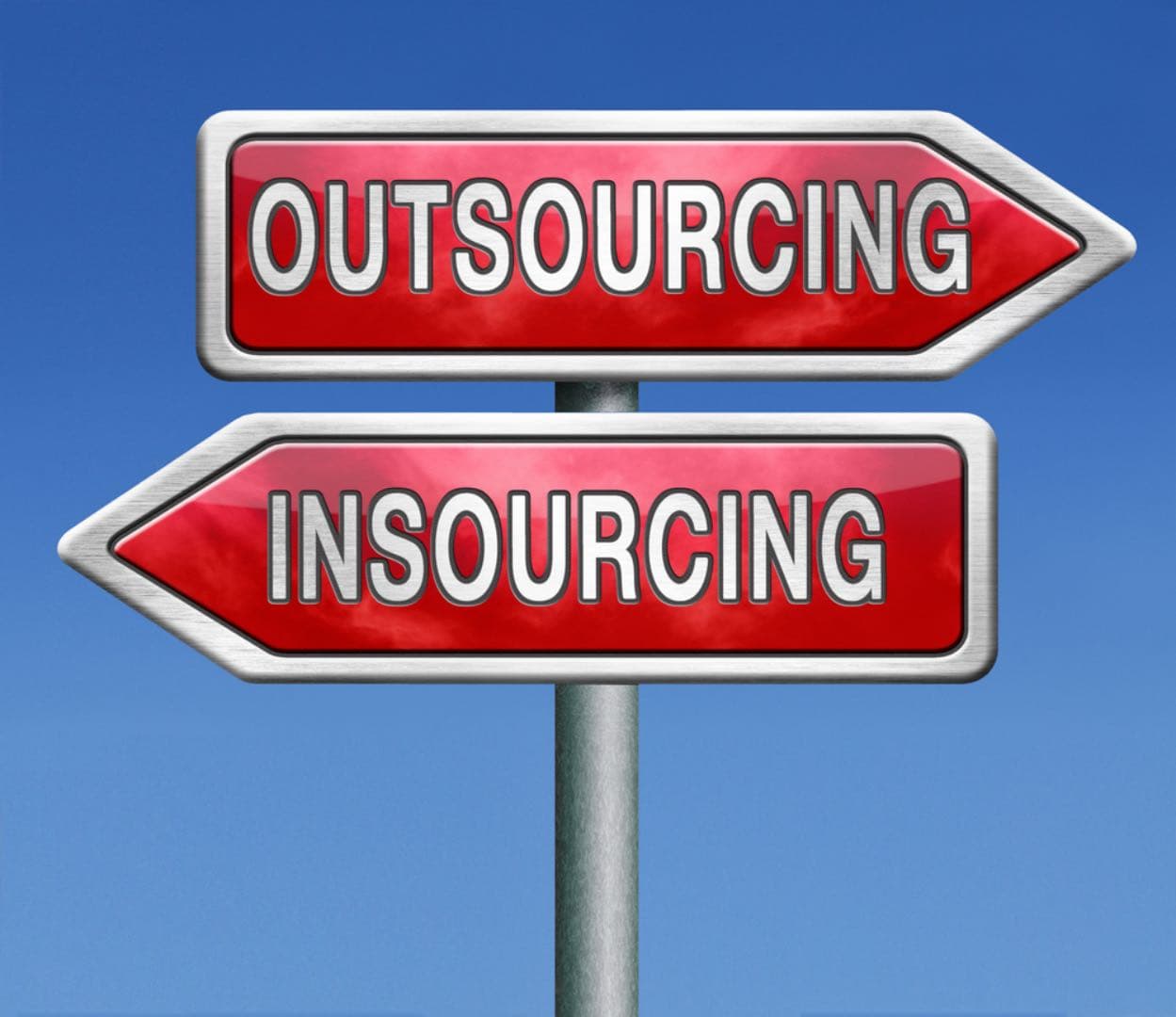
Insourcing vs. Outsourcing: What’s Best for My Digital Marketing?

Insourcing vs. Outsourcing: What’s Best for My Digital Marketing?

To insource digital-marketing needs or outsource them?
This is the typical question for many businesses, regardless of size.
Both have their benefits. But after two decades of experience that includes positions as an employee and employer, outsourcing has continually claimed the dominant hand.
Here’s why, explained from two perspectives:
  • As head of content and business development for a few companies and agencies.
  • As a freelancer and agency owner, the latter one who also outsources content and SEO work.
Insourcing vs Outsourcing: What’s Best for My Digital Marketing

Positives of Outsourcing Digital Marketing

The Big One: Money

When discussing product or service pricing, money talk is always the proverbial elephant in the room.
Many businesses won’t provide prospects any cost numbers until the end of a conversation – regardless if that conversation lasts three minutes or three months.
But when hiring, money talk takes on a much different story. Most businesses will set a hiring budget for their digital marketing needs and spend little time researching the talent needed to move the company forward.
This poor research typically leads to a bloated in-house staff. Don’t think this only occurs in startups; some of the most respected companies remain bloated.
Bloating kills profit margins. But this scenario could have been quickly diverted by outsourcing, which can save thousands of dollars every month due to cutting some major costs.
One example is when I was heading content creation for the marketing department of a pet company, which was then a Fortune 500 company. The marketing department had 10 entry-level marketers basically doing the work of two.
Quick math – even if each person was earning $35,000 a year, that’s $350,000 yearly in salary – not including benefits, paid time off, holiday pay, and expensive cross-country trips to sharpen that saw.
If the company was willing to outsource, a reputable agency would have costs around $10,000 to $15,000 monthly – and that’s thinking in modern prices for multiples services, from content marketing to SEO to PR to paid search (not including paid budget, of course!).
That company is still going but got surpassed by multiple competitors, two of which I freelanced for that outsourced their entire marketing needs.
Outsourcing simply saves money, all while providing further benefits.
outsourcing digital marketing needs brings expertise

More Expertise

When insourcing a digital marketing staff, many companies can’t afford top talent. This results in a staff of entry-level marketers.
Sure, the ones with the proper attitude and aptitude will grow, but this is not the usual case.
Reputable agencies are typically loaded with the best possible talent – especially those agencies that rely on outsourcing.
My agency has 30+ copywriters, each one hand-picked and matched to a client. If my agency doesn’t have a copywriter to match a client, I’ll do everything to find the correct one. Same goes for SEO – my agency only works with top brass, and matches each one to the client.
This is client-forward thinking; each client is matched with only the best talent, which provides endless value. And it all occurs at a fraction of what an in-house, expert-level staff would cost.

Easier to Manage, Less Headaches

When a company outsources their digital marketing needs, there’s minimal management. The agency (remember, not a hack agency) takes care of this, which lessens the headaches of everyone from the CEO to the sales team.
With less worrying about what’s going on in-house, the C-level execs can focus more on important things, like business development or creating an agenda to polish the sales team.
Headache
Quick side note: make sure your sales team always works closely with your outsourced digital marketing agency, especially on the content side. When sales and content unite, the results are magical.
I’ve worked with a few agencies that refused to get involved with a client’s sales team. This should be a giant red flag for the client.
When outsourcing to an agency, there is also a lack of delegation. This is directed at the in-house “head ofs” (e.g., head of content, head of PPC, or head of whatever).